On this page
- ›What Is Stable Diffusion and Why Use It Locally?
- ›Best Tool to Install Stable Diffusion Locally: Draw Things App
- ›How to Install Stable Diffusion Locally, Step-by-Step
- ›Real-World Cases to Use Stable Diffusion
- ›Minimum Hardware Requirements for Running Stable Diffusion
- ›Is it free to run Stable Diffusion locally?
- ›PC Not Powerful Enough? Use a Cloud Mac Mini Instead
- ›Conclusion
- ›FAQs
- ›Run Other AI Models Locally:
Stable Diffusion is one of the most powerful tools for turning text into images. With handy apps like Draw Things, you can easily set up and run Stable Diffusion right on your own device – no need for cloud services, subscriptions, or any coding knowledge.
This guide will show you how to install Stable Diffusion on Mac, PC, or a rented cloud machine, letting you keep everything private, in your hands.
What Is Stable Diffusion and Why Use It Locally?

Stable Diffusion turns the words you type into images, right on your own machine. Running a stable diffusion local setup keeps every prompt and image on your own device. So why run it locally instead of in the cloud?
- You keep everything private – Your prompts and images stay on your device.
- No internet needed – It works fine even when you’re not online.
- No usage limits – No waiting in line or worrying about credits.
- Fast on the right hardware – On a Mac Mini M4 (24GB), Draw Things makes an SD 1.5 512×512 image in roughly 5 to 10 seconds.
- More creative control – You can try out custom models and make adjustments accordingly.
- Portable and powerful – It works just as well on a laptop or a remote Mac rental as it does on a desktop.
Running it locally gives you the speed and flexibility of a powerful image tool without the usual cloud drawbacks.
Best Tool to Install Stable Diffusion Locally: Draw Things App
If you’re looking for an easy setup, Draw Things is a great option. It’s free, lightweight, and works on both desktops and mobile devices. Whether you’re on your personal computer or using a rented machine, it makes everything simple from beginning to end.
Why Choose Draw Things?
- Works offline, no internet needed.
- Made for modern CPUs with 8-16 GB of RAM.
- You can directly download Stable Diffusion models.
- Easy to use – no coding or command line skills required.
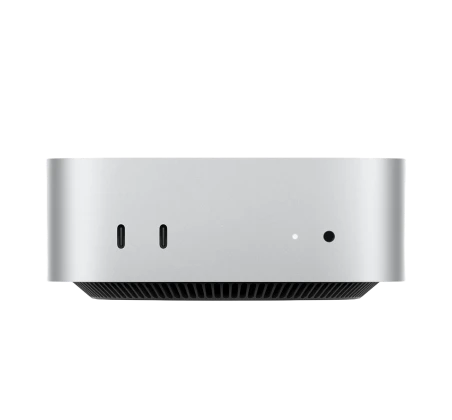
If you want to use Stable Diffusion on a Mac without buying one, check out providers like Rentamac.io. You can access Mac minis remotely, which is a cost-effective way to run Stable Diffusion, especially if you only need it for a little while.
Next, we’ll show you how to install it step by step.
How to Install Stable Diffusion Locally, Step-by-Step
Here is how to set up Stable Diffusion locally in four steps, no coding required.
1. Download and install Draw Things.
2. Open the app and find the model downloader.
3. Pick and download a Stable Diffusion model.
4. Load the model and run it locally.
Let’s break down each of these steps.
Step 1: Download Draw Things
To download Draw Things: AI Art Generator, just look it up in the App Store or head to the developer’s website. Download and install it like you would any other app

If you’re on a Mac or are using a rented one, make sure it has Apple Silicon (M1-M4) and at least 16 GB of RAM for the best experience.
Step 2: Open the App and Load the Stable Diffusion Model
Once you open the app, select “Download a model via Draw Things.”

Then, look for “Stable Diffusion” and pick a version. The classic 1.5, 2.1, and SDXL models are all there, and as of the 2026 builds Draw Things also downloads newer models like SD 3.5 and FLUX, so you are not stuck on an old release. The app will take care of downloading and installing whichever one you choose.

Step 3: Adjust Settings (Optional)
Before you generate your image, you can tweak a few settings if you want:

- Sampling Steps – More steps mean more detail in the image.
- Image Size – Pick the resolution and aspect ratio you prefer.
- Strength – This adjusts how well the image matches your prompt.
The default settings work well for beginners, but feel free to play around with them if you’re more experienced.
Step 4: Start Creating Images
You’re all set to create your images!
Just type in what you want, like “a futuristic city skyline at sunset.”
Hit Generate, and your image will pop up and save to your device.

Plus, since this runs right on your computer, everything remains private. After the first model download, Stable Diffusion offline generation needs no internet at all.
Real-World Cases to Use Stable Diffusion

Once you get Stable Diffusion set up, you’ll find a ton of ways to get creative, whether it’s for work or just for fun.
- Design – You can whip up visuals for social media posts, ads, posters, or packaging without much hassle.
- Content creation – You can easily make eye-catching thumbnails, illustrations for blogs, or unique graphics.
- Prototyping – You can quickly assemble app interfaces, branding ideas, or website layouts in no time.
- Creative hobbies – you can create AI portraits, digital wallpapers, or cool avatars just for kicks.
- Education – AI-generated images can jazz up your slides, classroom materials, or any visual learning tools.
Minimum Hardware Requirements for Running Stable Diffusion
The hardware requirements for running Stable Diffusion locally scale with the model you pick. A small model like SD 1.5 runs on an everyday machine, while SDXL and the newer models want more memory.
Here are the basic specs you’ll need:
| Component | Minimum requirement |
|---|---|
| CPU | A modern multi-core processor |
| RAM | 8 GB for basic models like SD 1.5; 16 to 32 GB or more for SDXL and high-res outputs |
| Storage | 10 to 20 GB of free space (models and outputs take up room) |
| Operating System | macOS (Apple Silicon preferred for Draw Things), Windows, or Linux |
| GPU (optional) | A discrete GPU such as an NVIDIA 20XX/30XX series helps performance on non-Mac computers |
Memory needs depend on which model you load. Here is how the current model generation stacks up, with rough generation times on a Mac Mini M4:
| Model | RAM / GPU VRAM | Mac Mini M4 time |
|---|---|---|
| SD 1.5 | 8 GB RAM / 4-6 GB VRAM | 512×512 in ~5-10s |
| SDXL | 16 GB RAM / 6-8 GB VRAM | 1024×1024 in ~20-40s |
| SD 3.5 | ~10 GB VRAM | 1024×1024, slower |
| Flux | 12-16 GB VRAM | 1024×1024 in ~50-90s |
If your PC doesn’t hit these specs, especially for RAM or CPU, you might experience slow performance or the app may not work at all.
Is it free to run Stable Diffusion locally?
Yes, running Stable Diffusion locally is free. The model is open source, and apps like Draw Things cost nothing, so once your machine is set up you pay $0 per image with no subscriptions, no credits, and no content filters. The only real cost is the hardware that does the work.
That makes it very different from the cloud image generators you sign up for online. There is no per-image charge, no monthly plan, and no queue. You can generate ten images or ten thousand, and the price stays the same.
Privacy is part of the deal too. Because the whole stable diffusion local installation runs on-device, nothing is uploaded anywhere. Your prompts, your reference images, and your finished art never leave your machine.
So where does the money go? Into the hardware. A capable machine with enough RAM is the one real expense.
That is where renting a Mac comes in handy. Instead of buying a new computer just to try run Flux AI on Mac or SDXL, you can rent a Mac mini for as long as you need it and hand it back when you are done.
PC Not Powerful Enough? Use a Cloud Mac Mini Instead
If your current PC isn’t cutting it for running Stable Diffusion smoothly, especially when you need higher-quality outputs or are working with more complex models like SDXL, you don’t have to spend a fortune on a new machine.
Rentamac.io gives you access powerful Mac minis remotely, perfect for creative tasks like image generation.
Here’s what you get:
- Real Mac hardware – You’ll be using an actual Mac mini with macOS, not some emulator.
- Built for the job – On Apple Silicon, Draw Things runs about 20% or more faster than the PyTorch path on the same Mac, and its on-demand loading cuts memory use by up to about 50%, so SD 1.5 runs even on an 8 GB Mac.
- Ready to use – Tools like Draw Things are set up for you. Just log in and start creating.
- Flexible pricing – Choose from daily, weekly, or monthly rates based on what you need.
- Private access – You have your own dedicated setup, so no sharing resources or waiting in line.
This is a great way to get top-notch AI performance without the hefty price tag of buying a Mac.
Conclusion
If you’re into creative projects or want to explore AI art, setting up Stable Diffusion on your device is a smart move. With tools like Draw Things, you don’t need to be a tech whiz – just a capable device.
If you’re set on installing Stable Diffusion on Mac or another compatible device, start with this guide and enjoy full creative freedom.
Looking for a powerful Mac but don’t want to buy one? Consider renting a high-performance Mac mini from Rentamac.io. It’s perfect for local AI image generation.
FAQs
Can I install Stable Diffusion on Mac, Windows, or Linux?
Yes! Draw Things works well on macOS and iOS. If you’re using Windows or Linux, you can check out Rentamac.io’s solution to obtain a dedicated Mac in the cloud, or you can check out alternatives otherwise, like DiffusionBee.
Is Stable Diffusion free?
Yes. Both the Stable Diffusion models and the Draw Things app are free to use. Once your machine is set up, you pay $0 per image, with no subscriptions and no content filters. The only real cost is the hardware that runs it.
Do I need to code anything?
Not at all! Draw Things has a straightforward setup with no coding needed.
What are the hardware requirements?
It depends on the model you pick. A basic model like SD 1.5 runs on an 8 GB machine, while SDXL wants about 16 GB for the best experience. You also want a modern CPU and 10 to 20 GB of free storage for the models and outputs.