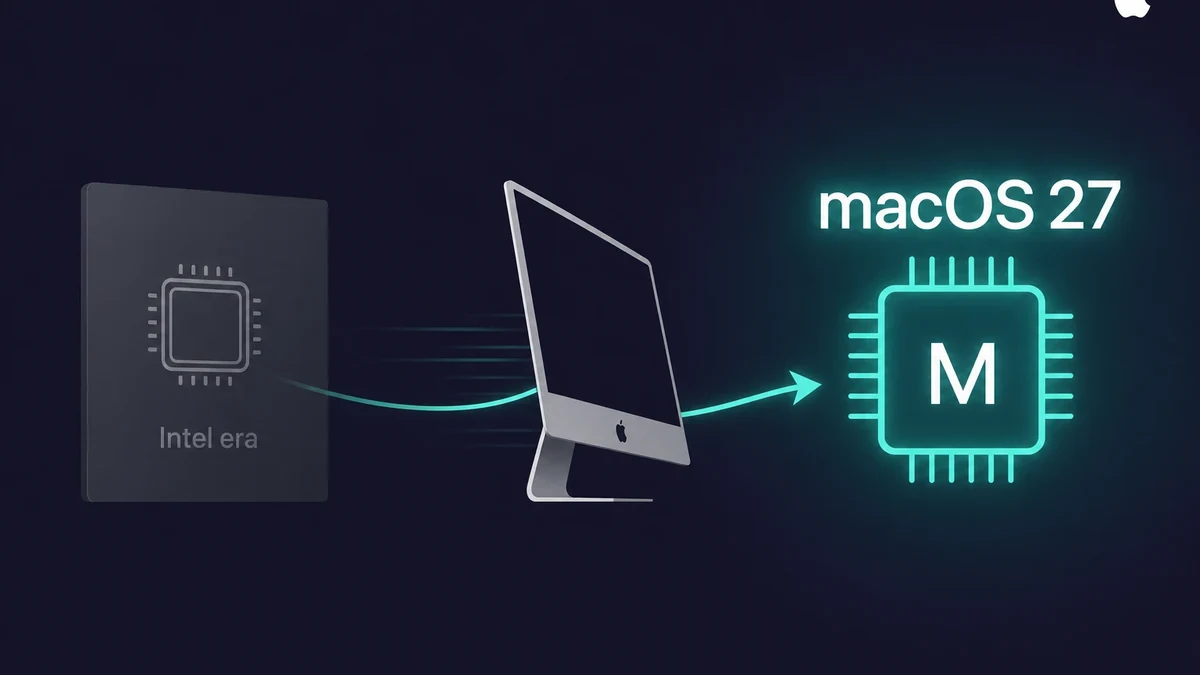
Apple’s WWDC 2026 keynote lands on Monday, June 8. The one macOS 27 change Apple has actually confirmed is also the biggest one for anyone still on an older Mac. According to Apple’s developer docs, reported by MacRumors and TechRepublic, macOS 27 drops Intel Mac support and is the last release to ship the full Rosetta 2 translation layer.
That confirmed change closes the Apple Silicon transition Apple began in 2020. It also starts a countdown for Intel-only software. The Siri overhaul, the Liquid Glass tweaks, and the AI features filling the preview coverage are still pre-keynote rumor, traced back to Bloomberg’s Mark Gurman. Apple has not announced any of it.
So here is what is actually locked in, and what is not.
On this page
Four Intel Macs lose the upgrade
macOS 27 now requires a Mac with an M-series chip. macOS 26 Tahoe is the last release that runs on Intel, a point confirmed by MacRumors and corroborated widely.
Four Intel models get cut:
| Model | Year |
|---|---|
| 13-inch MacBook Pro (4 Thunderbolt 3 ports) | 2020 |
| 16-inch MacBook Pro | 2019 |
| 27-inch iMac | 2020 |
| Mac Pro | 2019 |
The list is identical across MacRumors, TechRepublic, Technobezz, and 9to5Mac. Those four machines keep getting security updates for three years, per MacRumors and TechRepublic, but no new features. After that, they are frozen.
Rosetta 2 starts its countdown
macOS 27 is the final release with the full Rosetta 2, the layer that lets Intel apps run on Apple Silicon.
In its developer documentation, quoted by MacRumors, Apple says Rosetta “was designed to make the transition to Apple silicon easier” and will stay “through macOS 27 … to help developers complete the migration of their apps.”
After that, TechRepublic reports, only a limited version stays, aimed mainly at older, unmaintained games built on Intel frameworks. Rosetta fully ends with macOS 28.
That soft wording covers a hard deadline. A community database called RosettaCheck counts more than 18,800 Intel-only Mac apps with no native build, per TechTimes. Those apps break when Rosetta winds down with macOS 28 in fall 2027.
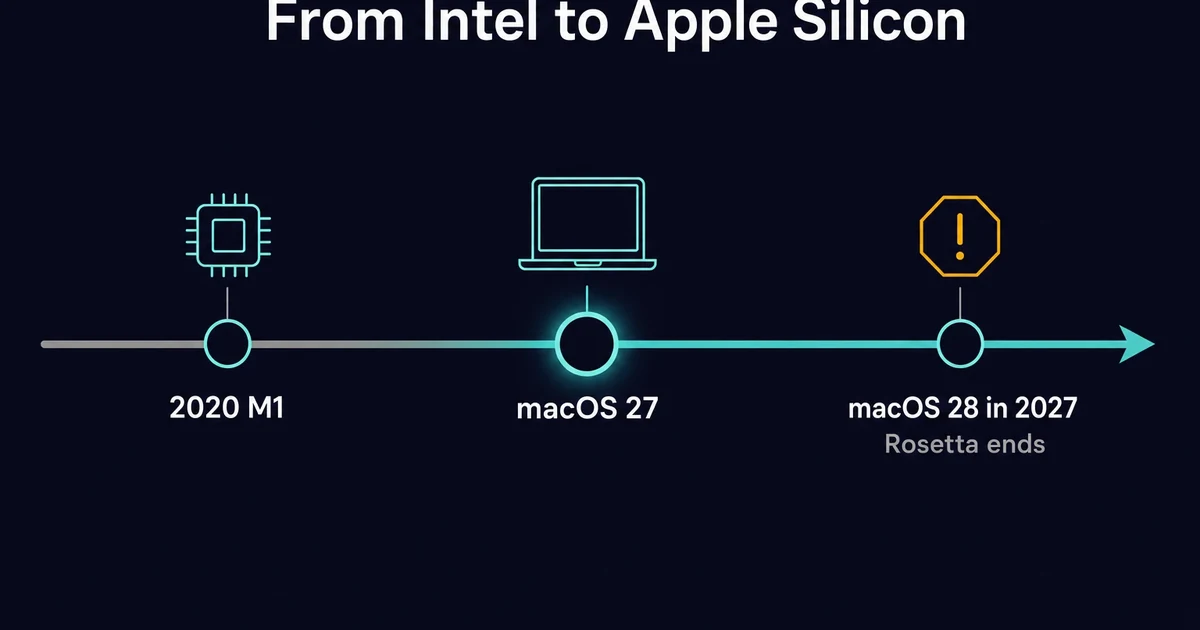
For Technobezz, this caps a roughly six-to-seven-year migration that started with the Apple Silicon transition when the M1 arrived in 2020.
Everything else is still a rumor
The features dominating the WWDC previews have no official confirmation. Multiple outlets, citing Bloomberg’s Mark Gurman, expect:
- A revamped Siri, reportedly its first standalone app, with a conversational mode, on-screen awareness, and deeper in-app actions.
- A Liquid Glass revision aimed at readability, fixing transparency and shadow rendering that read worse on Mac than on iPhone.
- AI updates across Photos, Safari, and Shortcuts.
Treat all of it as expectation, not fact. The skeptical read comes from Macworld, which recalls that Liquid Glass “proved controversial, so much so that Apple was forced to add a toggle,” and points to iOS 26 bugs and delayed AI work. The new Siri, per AppleInsider, arrives “two years late” and still “in beta.”
Even the name is shaky. The “Big Bear” versus “Emerald” reporting rests on a thin social-media slip, and the single-sourced “MacBook Neo with A18 Pro” requirement appears only in MacRumors, so both stay unconfirmed.
The keynote tension is simple. Can Apple sell a stability-first, “Snow Leopard-style” release on stage when its marquee Siri work is still unannounced? The confirmed parts, the Intel cutoff and the Rosetta deadline, are the ones developers and Intel-Mac owners can plan around today. The rest waits for Monday.