 PT
PT  EN
EN  ES
ES  TR
TR  FR
FR  AR
AR 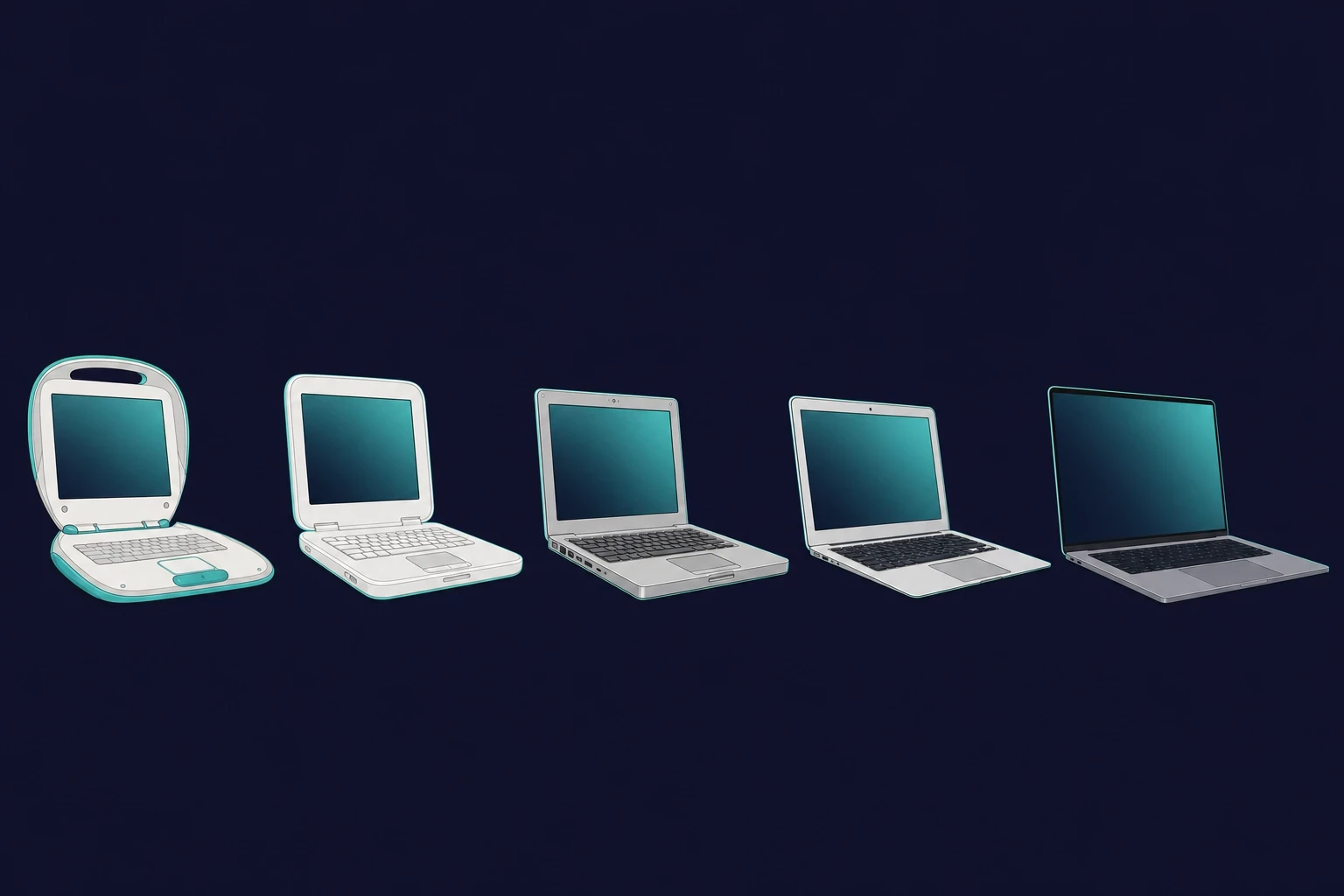
Nesta página
- ›PowerBook 100 (1991)
- ›Modelos de MacBook por ano (tabela completa da linha do tempo)
- ›PowerBook 140 e 170 (1991)
- ›Série PowerBook Duo, 1992 a 1997
- ›PowerBook Série 500 (1994)
- ›PowerBook G3 (1997-2001)
- ›PowerBook G4 (2001-2006)
- ›iBook G3 (1999-2003)
- ›iBook G4 (2003-2006)
- ›Primeiro MacBook Pro
- ›MacBook 2006
- ›MacBook Air
- ›MacBook (2008)
- ›MacBook Pro (tela Retina)
- ›MacBook (2015-2019)
- ›MacBook Pro (2016)
- ›MacBook Pro (2017-2019)
- ›MacBook Pro de 16 polegadas (2019)
- ›MacBook Pro M1 (2020)
- ›MacBook Air M1 (2020)
- ›MacBook Pro M1- 14, 16 polegadas- 2021
- ›MacBook Air M2 (2022)
- ›MacBook Pro 13 pol. M2 (2022)
- ›Modelos MacBook Pro M2 (2023) com 14 e 16 polegadas
- ›MacBook Air 15 polegadas (2023)
- ›MacBook Pro de 14 e 16 polegadas M3 (2023)
- ›O Apple Silicon ganha ritmo: M3 Air, M4 e M5 (2024-2025)
- ›Lista de gerações do MacBook: do PowerPC ao Apple Silicon
- ›História do macOS: O software por trás das telas
- ›Perguntas frequentes sobre a história do MacBook
Quando Steve Jobs apresentou o primeiro MacBook Air tirando-o de um simples envelope pardo em 2008, aquilo não foi só um lançamento, mas também uma declaração. A história do MacBook é uma longa sequência de reinvenções, em que a Apple continuou misturando design e engenharia para criar algo que parecia mais do que um computador.
Dos robustos PowerBooks dos primeiros anos aos finos Pro da série M de hoje, cada MacBook foi reinventado várias vezes. Este guia mostra os modelos ano a ano, para você ver como os designs, os recursos e os chips da Apple mudaram com o tempo.
A versão curta
- O primeiro notebook da Apple foi o PowerBook 100, lançado em 1991.
- O primeiro modelo realmente chamado de “MacBook” chegou em 2006, o mesmo ano em que a Apple passou para os chips Intel.
- Existem três eras de chips: PowerPC (1991-2005), Intel (2006-2020) e Apple Silicon (de 2020 até hoje).
- Os modelos atuais são o MacBook Pro M5 (outubro de 2025) e o MacBook Air M4 (março de 2025).
PowerBook 100 (1991)

Antes do PowerBook 100, os computadores portáteis eram volumosos e difíceis de carregar. Ele mudou isso com um design pequeno e leve que tornou possível a computação portátil de verdade.
- Projetado em parceria com a Sony, era pequeno e leve para a época
- O primeiro notebook da Apple com trackball, o antecessor do trackpad atual
- Um processador Motorola 68000 que dava conta das tarefas do dia a dia
O PowerBook 100 foi um divisor de águas para os notebooks da Apple. Ele marcou o primeiro passo da empresa na computação portátil.
Modelos de MacBook por ano (tabela completa da linha do tempo)
Aqui está a linha do tempo completa do MacBook, do PowerBook 100 de 1991 ao MacBook Pro M5 de 2025. A tabela relaciona cada linha de modelos ao ano e ao chip que a define, para você ir direto à geração que interessa.
| Modelo | Ano | Era do chip | Novidade marcante |
|---|---|---|---|
| PowerBook 100 | 1991 | Motorola 68000 | Primeiro portátil da Apple |
| PowerBook G3 “Wall Street” | 1997 | PowerPC G3 | Primeiro a rodar o Mac OS X |
| Primeiro MacBook Pro | 2006 | Intel Core | Primeiro MacBook com Intel (fev. de 2006) |
| MacBook (policarbonato) | 2006 | Intel Core Duo | Primeiro modelo chamado “MacBook” (maio de 2006) |
| MacBook Air | 2008 | Intel | O notebook mais fino da época |
| MacBook Pro (Retina) | 2012 | Intel | Primeira tela Retina |
| MacBook (12 polegadas) | 2015 | Intel Core M | Teclado borboleta, só USB-C |
| MacBook Pro M1 | 2020 | Apple M1 | A mudança para o Apple Silicon |
| MacBook Pro M1 Pro/Max | 2021 | Apple M1 Pro/Max | XDR Mini-LED, as portas voltam |
| MacBook Pro M3 | 2023 | Apple M3 | Acabamento preto-espacial |
| MacBook Air M4 | 2025 | Apple M4 | A partir de $999, azul-céu |
| MacBook Pro M5 | 2025 | Apple M5 | Topo de linha atual ($1,599) |
PowerBook 140 e 170 (1991)

O 140 e o 170 foram lançados junto com o PowerBook 100, voltados para profissionais que queriam mais desempenho. O 170 foi o primeiro notebook da Apple com tela de matriz ativa, o que deixava a imagem mais nítida.
- Processadores mais rápidos voltados para usuários corporativos
- Os primeiros notebooks da Apple com apoio para as mãos, para mais conforto
- Mais pesados que o PowerBook 100, mas verdadeiros burros de carga na época
Série PowerBook Duo, 1992 a 1997

Este 2 em 1 transformava um notebook ultrafino em um desktop por meio de uma dock, uma ideia muito à frente do seu tempo.
- O PowerBook mais leve da Apple, ideal para quem viajava com frequência
- Sem portas; precisava estar na dock para o uso completo
- Um design minimalista que antecipava o MacBook Air
- A dock nunca pegou, mas apontou o caminho que a Apple seguiria
PowerBook Série 500 (1994)

A série PowerBook 500 trouxe uma das maiores mudanças da história dos notebooks: o trackpad.
- O primeiro laptop com trackpad, eliminando o peso do trackball
- Alto-falantes estéreo embutidos, algo raro em notebooks na época
- Modo de suspensão da bateria para retomada instantânea
- A base dos trackpads dos MacBooks modernos
PowerBook G3 (1997-2001)

“Wall Street” era o apelido do PowerBook G3, uma máquina potente que superava muitos desktops da época.
- Processador PowerPC G3, o chip de notebook mais rápido da época, em uma elegante carcaça preta
- O primeiro notebook da Apple com suporte completo ao Mac OS X
- Abriu caminho para os MacBooks de alto desempenho
PowerBook G4 (2001-2006)

O PowerBook G4 trouxe o visual de alumínio que ainda define os MacBooks de hoje.
- Corpos de alumínio e titânio duráveis e elegantes
- Telas de alta resolução em formatos widescreen, ótimas para trabalho criativo
- O último PowerBook antes de a Apple passar para os Macs com Intel
- O antecessor direto do MacBook Pro
iBook G3 (1999-2003)

O iBook G3 era voltado para estudantes e usuários casuais, e era divertido de usar.
- Formas de concha brilhantes de Tangerina, Mirtilo, Uva e muito mais
- O primeiro a ter Wi-Fi integrado sem fio
- Resistente o bastante para aguentar quedas melhor que a maioria dos notebooks
- O Mac que tornou a Apple descolada para os estudantes que compravam o primeiro notebook
iBook G4 (2003-2006)

O iBook G4 transformou o G3 em algo mais elegante e maduro.
- O invólucro de plástico era branco e era uma prévia do futuro MacBook
- Um novo processador PowerPC G4, muito mais rápido que o dos modelos antigos
- Otimizado para o Mac OS X, para que o software rodasse bem no hardware
- Uma versão mais barata do PowerBook que facilitou a compra de notebooks Mac
Primeiro MacBook Pro

A Apple lançou o primeiro MacBook Pro em fevereiro de 2006, um grande salto envolto em alumínio. Com cerca de 2,5 kg e 2,5 cm de espessura, ele trouxe novidades como o teclado retroiluminado e o conector MagSafe, que se soltava com segurança se alguém tropeçasse no cabo.
- O notebook mais rápido no lançamento, com chips Intel quatro vezes mais rápidos que o PowerBook G4
- Uma tela brilhante, um trackpad largo e um sensor de movimento que estacionava o disco rígido em caso de queda
- Logo chegou uma versão de 17 polegadas para usuários avançados que queriam mais pixels
MacBook 2006

Mais tarde, em 2006, a Apple renovou sua linha de consumo com o MacBook de policarbonato, que substituiu o iBook e o PowerBook de 12 polegadas. Foi menos uma atualização e mais um recomeço.
- Design mais fino com uma tela brilhante de 13 polegadas
- Chips Intel Core Duo, cinco vezes mais rápidos que o iBook
- Câmera iSight integrada para chamadas com vídeo
- Proteção contra quedas e MagSafe, emprestados do MacBook Pro
- Disponível em branco e preto, que ganhou status de cult
- A Apple o chamou de “o notebook de consumo mais avançado do mundo”, e para muitos foi o primeiro Mac que parecia realmente pessoal
MacBook Air

Em 2008, Steve Jobs apresentou o MacBook Air tirando-o de um envelope. Era o notebook mais fino do mundo na época. A Apple eliminou a unidade óptica SuperDrive e adicionou um trackpad multitoque com gestos.
O design fino e leve fez do Air um dos favoritos dos desenvolvedores, principalmente daqueles que buscavam formas de desenvolver aplicativos iOS sem Mac usando configurações hospedadas na nuvem.
- Tela LED de 13 polegadas com teclado retroiluminado de tamanho normal
- Câmera iSight integrada para chamadas com vídeo
- Um modelo de 11,6 polegadas foi lançado para combater netbooks e ultrabooks
MacBook (2008)

A Apple reconstruiu o MacBook de policarbonato em uma resistente carcaça unibody de alumínio. Steve Jobs o chamou de o computador mais ecológico que a Apple já tinha feito, por atender aos principais padrões ambientais: Energy Star 4.0, EPEAT Gold e RoHS.
- Tudo sem produtos químicos tóxicos (como cabos sem PVC, telas de LED sem mercúrio e vidro sem arsênico)
- Gráficos de notebook de alto desempenho em um pacote de nível básico
MacBook Pro (tela Retina)

A Apple levou a tela Retina ao MacBook Pro, a tela de notebook com maior resolução da época. Ela tinha mais de 5 milhões de pixels, mais que uma TV HD.
- Mais leve e quase tão fino quanto um MacBook Air
- Não tem um SuperDrive óptico, mas usa armazenamento flash de estado sólido
- Design minimalista
- Primeiro (e último) MacBook Pro com uma porta HDMI
- Porta de alimentação MagSafe 2 mais fina e alto-falantes aprimorados
MacBook (2015-2019)

A Apple reviveu o MacBook como seu notebook mais fino e mais leve, com apenas 2 libras e 13,1 mm de espessura.
- Pesa apenas 2 libras e tem 13,1 mm de espessura, superando o MacBook Air
- Leve e compacto, com tela Retina de 12 polegadas e teclado borboleta com trackpad Force Touch
- Liquidou todas as portas; apenas o USB-C/Thunderbolt 3 substituiu o MagSafe e o USB-A
- Resfria-se sozinho e opera silenciosamente
- Descontinuado em julho de 2019 para simplificar a linha de MacBooks da Apple
Esta também é a era do teclado borboleta, lembrado com menos carinho. Com apenas cerca de 0,7 mm de curso, ele travava facilmente quando poeira ou migalhas entravam sob uma tecla, e se tornou o grande ponto fraco desses modelos. A Apple acabou criando um programa estendido de reparo para cobrir as falhas.
MacBook Pro (2016)

A Apple apresentou o MacBook Pro 2016 em dezembro, mais fino e leve que antes. A versão sem Touch Bar chegou até a substituir o Air. Os modelos com Touch Bar, de 13 e 15 polegadas, trocaram as teclas de função por uma pequena faixa sensível ao toque.
- Sensor Touch ID para logins melhores e mais seguros
- Mais conectividade com as portas Thunderbolt 3/USB-C
- Trackpad maior e teclado butterfly aprimorado
- Tela mais brilhante e de grande amplitude, como a do iPhone 7
- Melhoria na velocidade da SSD e na qualidade do som
- Cor cinza espacial disponibilizada para a coleção MacBook Pro
- Estabeleceu um novo recorde de vendas relatado pela Apple
MacBook Pro (2017-2019)

Chips mais rápidos e teclados melhores aprimoraram o novo MacBook Pro.
- Processadores opcionais de 8 núcleos e chips Intel Coffee Lake (15 polegadas)
- Até 32 GB de RAM para modelos de última geração
- Redesenhou o teclado butterfly para maximizar a confiabilidade
- Modelo básico com Touch Bar de 13 polegadas abaixo do radar
MacBook Pro de 16 polegadas (2019)

O MacBook Pro de 16 polegadas tinha a maior tela Retina que a Apple já tinha colocado em um MacBook.
- Resolução de 3072 x 1920 e densidade de pixels de 226 ppi
- O novo teclado substituiu o tipo borboleta
- Até 64 GB de RAM e 8 TB de armazenamento SSD
- Processadores Intel de 9ª geração com melhor gerenciamento térmico
- Um sistema de som com 6 alto-falantes e um conjunto de microfones melhorado
MacBook Pro M1 (2020)

O chip M1 deu ao MacBook Pro seu melhor desempenho e a maior autonomia de bateria até então.
Com a mudança para o Apple Silicon, muitos desenvolvedores buscaram novas formas de testar aplicativos iOS no Windows remotamente antes de migrar de vez para os Macs com M1.
- Uma CPU de 8 núcleos para processamento rápido
- Duas portas Thunderbolt para conectividade
- Magic Keyboard com um novo design
- Leve, pesando 1,5 kg, para portabilidade
MacBook Air M1 (2020)

O MacBook Air M1 ficou mais rápido e, o melhor de tudo, ganhou um design silencioso, sem ventoinha.
- Chip M1 de 8 núcleos com uma GPU de 7 ou 8 núcleos
- Gráficos cinco vezes melhores com processamento 3,5 vezes mais rápido
- Uma SSD super-rápida, duas vezes mais rápida que a dos modelos anteriores
- Cerca de 18 horas de duração da bateria
- Magic Keyboard e três cores: Prata, cinza espacial e dourado
MacBook Pro M1- 14, 16 polegadas- 2021

Os novos MacBook Pro da Apple usam os chips M1 Pro e M1 Max, com um grande ganho de desempenho.
- CPU 70% mais rápida com 3× a largura de banda da memória para um aumento significativo de velocidade
- GPU de 32 núcleos com desempenho gráfico 4 vezes mais rápido
- Tela XDR de mini-LED com teclas de função
- Três portas Thunderbolt 4, um slot SDXC e HDMI para conectividade versátil
- Câmera HD de 1080p integrada a um sistema de seis alto-falantes
MacBook Air M2 (2022)

O MacBook Air M2 ganhou um design novo e o chip M2, mais recente, da Apple.
- Apresenta o novo processador M2 para melhorar o desempenho
- Tela Liquid Retina maior, de 13,6 polegadas
- Ultrafino (11,3 mm) e ultraleve (2,7 lbs)
- Disponível em Silver, Space Gray, Midnight e Starlight
- Câmera HD de 1080p, quatro alto-falantes e teclas de função físicas
- Suporta carregamento rápido com um adaptador USB-C de 67 W
MacBook Pro 13 pol. M2 (2022)

O MacBook Pro de 13 polegadas manteve o design clássico, mas ganhou um bom impulso com o chip M2.
- Chip M2 com CPU de 8 núcleos e GPU de 10 núcleos
- Suporta até 24 GB de memória unificada e 2 TB de armazenamento
- Mantém a Touch Bar, o único MacBook a fazer isso
- Câmera de 720p, alto-falantes estéreo e pesa 2,5 kg
- Disponível em prata e cinza espacial
Modelos MacBook Pro M2 (2023) com 14 e 16 polegadas

Os chips M2 Pro e M2 Max trouxeram um grande ganho de potência aos MacBook Pro de 2023.
- Cerca de 22 horas de duração da bateria
- Melhora as velocidades de conexão do Wi-Fi 6E
- HDMI atualizado para saída 8K
- Oferece até 96 GB de memória unificada com o M2 Max
- Tela Liquid Retina XDR, câmera FaceTime HD de 1080p
- Seis microfones de alto-falante com qualidade de estúdio
A potência do M2 Max o torna ideal para cargas de trabalho como a implementação de modelos de IA - muitos profissionais agora executar modelos de linguagem grandes em um Mac sem a necessidade de GPUs externas.
MacBook Air 15 polegadas (2023)

O MacBook Air da Apple, com 15,3 polegadas, é 25% maior em comparação com o tamanho de 13 polegadas.
- 11,5 mm de espessura, 3,3 lbs de peso
- Chip M2 com CPU de 8 núcleos, GPU de 10 núcleos e Neural Engine de 16 núcleos
- Tela Liquid Retina com 500 nits de brilho
- Suporta até 24 GB de RAM unificada e oferece 18 horas de duração da bateria
- Design artístico com um sistema de áudio espacial de oito alto-falantes para operação silenciosa
- Câmera FaceTime HD de 1080p (somente nos EUA) e carregamento MagSafe
MacBook Pro de 14 e 16 polegadas M3 (2023)

No fim de 2023, a Apple atualizou o MacBook Pro com os chips M3, M3 Pro e M3 Max para mais velocidade e eficiência.
- Modelo de 14 polegadas com um chip M3, CPU de 8 núcleos, GPU de 10 núcleos e Neural Engine de 16 núcleos
- Modelos de 16 polegadas com M3 Pro ou M3 Max, até 128 GB de RAM e um SSD de 8 TB
- Tela Liquid Retina XDR com brilho contínuo de 1000 nits
- Nova cor preta espacial com um acabamento resistente a impressões digitais
O Apple Silicon ganha ritmo: M3 Air, M4 e M5 (2024-2025)
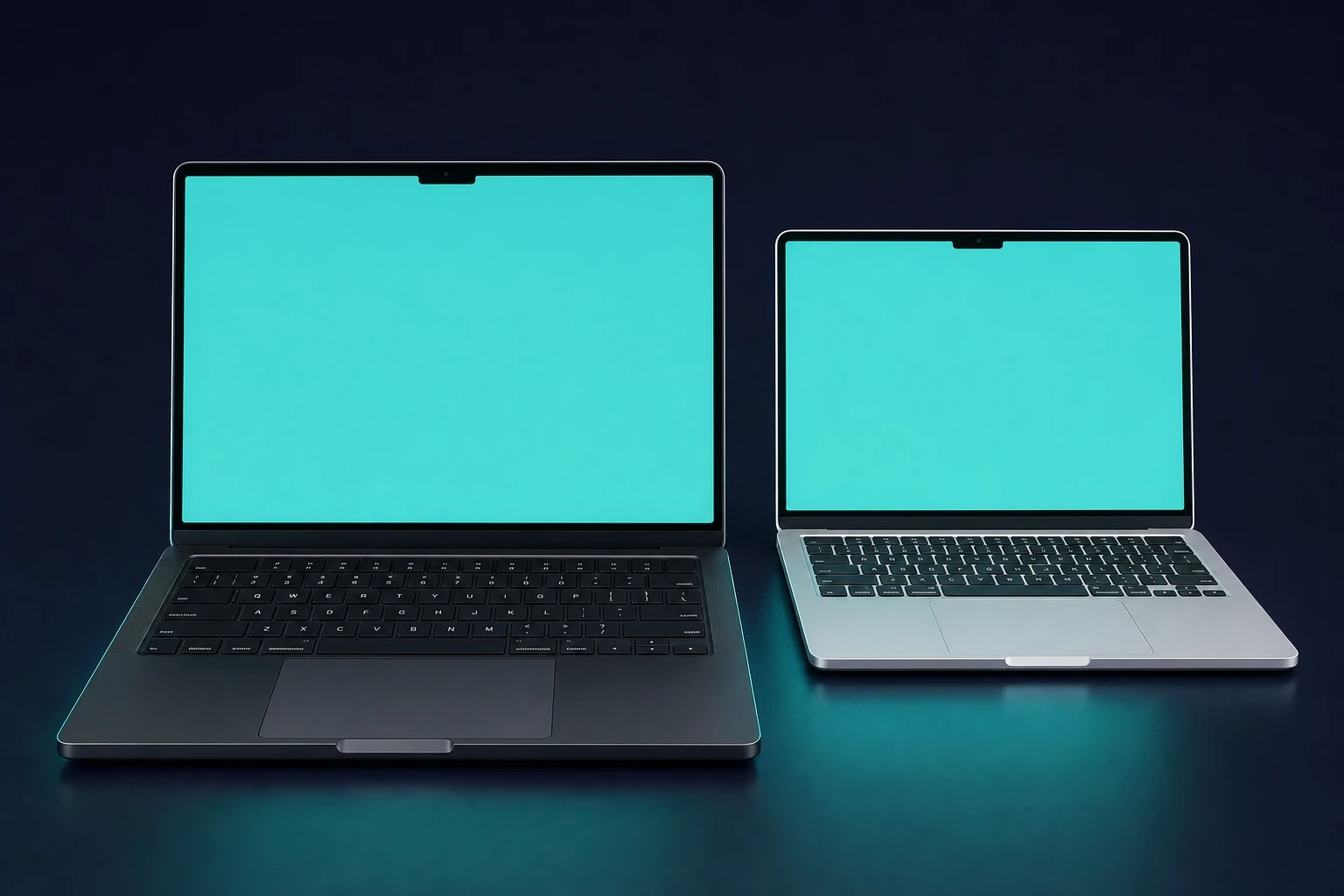
A fase mais recente da evolução do MacBook anda rápido. Depois do M3, no fim de 2023, a Apple manteve o ritmo: o MacBook Air M3 em março de 2024, o MacBook Pro M4 em outubro de 2024, o MacBook Air M4 em março de 2025 e o MacBook Pro M5 em outubro de 2025. Veja o que cada um mudou.
O MacBook Air M3 chegou em 4 de março de 2024, nos tamanhos de 13 e 15 polegadas. Ele levou o chip M3 à linha Air, mais leve, e preencheu o espaço entre o Air M2 de 2022 e a era M4.
Depois veio o MacBook Pro M4, em 30 de outubro de 2024, nos tamanhos de 14 e 16 polegadas, com opção de M4, M4 Pro ou M4 Max. O modelo básico de 14 polegadas agora começa com 16GB de RAM, o que importa se você está avaliando se um MacBook vale a pena para trabalhos mais pesados.
O MacBook Air M4 (12 de março de 2025) começa em $999, ganha uma câmera Center Stage de 12 MP e um novo acabamento azul-céu, e aumenta a largura de banda da memória para 120 GB/s, contra 100 GB/s do M3. Para uma carga de trabalho como a de um MacBook para ciência de dados, essa largura de banda extra aparece nos benchmarks reais.
O topo de linha atual é o MacBook Pro M5, lançado em 22 de outubro de 2025, com pré-venda na semana anterior. O de 14 polegadas começa em $1,599, com CPU de 10 núcleos, GPU de 10 núcleos e Neural Engine de 16 núcleos. No lançamento, o de 16 polegadas continuou com o M4 Pro e o M4 Max, em vez de pular direto para o M5.
Lista de gerações do MacBook: do PowerPC ao Apple Silicon
Colocando toda a linha lado a lado, vemos um padrão claro: cada era de chips deixou o MacBook mais rápido, enquanto a Apple continuou buscando modelos mais finos e leves.
- Era PowerPC (1991-2005): PowerBooks e iBooks com chips Motorola/IBM
- Transição da Intel (2006-2020): CPUs mais rápidas, mas com comprometimento térmico
- Apple Silicon (de 2020 até hoje): a série M, que hoje vai do M1 ao M5, calou os primeiros céticos e mudou o que as pessoas esperavam de um notebook na bateria
História do macOS: O software por trás das telas
Todo MacBook depende do seu sistema operacional. Lembra do Mac OS 9 (1999)? Ele trazia o Sherlock para buscar arquivos. Depois veio o OS X Tiger (2005), com o Spotlight e os widgets do Dashboard. O macOS Sonoma (2023) permitiu transformar sites em apps e adicionou um modo de jogo para partidas mais fluidas.
A Apple lançou mais duas versões desde então. O macOS Sequoia chegou em 16 de setembro de 2024, e o macOS Tahoe veio em 15 de setembro de 2025. O Tahoe foi o primeiro macOS a abandonar totalmente o suporte a Intel e o que introduziu a interface Liquid Glass. A versão mais recente é o macOS Tahoe 26.5, lançado em 11 de maio de 2026.
Perguntas frequentes sobre a história do MacBook
Respostas rápidas para as perguntas mais comuns sobre a história do MacBook.
Quando foi lançado o primeiro notebook da Apple?
O PowerBook 100, o primeiro portátil da Apple, foi lançado em 1991. Ele levou a computação portátil à linha Mac com um trackball e um processador Motorola 68000, e definiu o modelo sobre o qual todos os notebooks da Apple foram construídos desde então.
Quando foi lançado o primeiro MacBook?
O primeiro produto realmente chamado de “MacBook” chegou em maio de 2006: o modelo de consumo de policarbonato que substituiu o iBook. O primeiro MacBook Pro tinha saído alguns meses antes, em fevereiro de 2006, como o primeiro notebook da Apple com Intel.
Qual é o modelo de MacBook mais recente?
Em 2025, o topo de linha é o MacBook Pro M5, lançado em 22 de outubro de 2025, a partir de $1,599. O Air atual é o MacBook Air M4, de março de 2025, que começa em $999.
Quantas gerações de MacBook existem?
A divisão mais clara é em três eras de chips: PowerPC (1991-2005), Intel (2006-2020) e Apple Silicon, que vai do M1, em 2020, ao M5, em 2025. Dentro da era Apple Silicon, M1, M2, M3, M4 e M5 contam cada um como uma subgeração, então você pode agrupar a linha de um jeito ou de outro, dependendo do nível de detalhe que quiser.
Qual foi o pior teclado de MacBook?
A maioria aponta o teclado borboleta da era 2015 a 2019. Com apenas cerca de 0,7 mm de curso, ele travava quando entrava sujeira sob uma tecla, e as falhas foram tão comuns que a Apple criou um programa estendido de reparo.
Qual foi o MacBook mais fino?
O MacBook de 12 polegadas de 2015 foi o mais fino da época, com 0,9 kg e 13,1 mm. O MacBook Air de 2008 definiu a referência original de espessura, e a história do Mac mini segue uma trajetória parecida no lado dos desktops.